
Varicocele treatment with the microsurgical method. Varicocele operations in Istanbul.
What is varicocele?
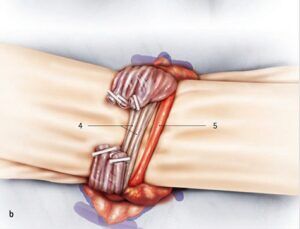
Varicocele is known as the varicose enlargement of the veins that drain deoxygenated blood from around the testis. Looking at the anatomy of the testis, there are 2 or 3 arteries supplying it, the vessels carrying deoxygenated blood (veins) and the lymphatic system. The veins draining the testis have a certain diameter, on average between 2 and 2.5 mm, and contain a valve system that prevents blood from flowing back to the testis. When this valve system fails, the veins begin to enlarge and deoxygenated blood begins to pool over the testis. The varicose enlargement of these veins is called varicocele.
Varicocele is seen mostly on the left side. The explanation is that the veins draining the left testis empty at a right angle into the vein draining the kidney, and these two vessels then join and empty into the main vein called the vena cava. The junction angle of these vessels is 90 degrees, so a backward pressure develops where the blood empties and begins to damage the venous valve.
The veins draining the right testis empty directly into the main vessel, the vena cava, at a wide angle and are therefore exposed to less pressure. That is why, on average, 90% of varicoceles are seen on the left side and 10% on the right. In varicocele that is only on the right side, an ultrasound should be performed to check for an abdominal mass.
What are the symptoms of varicocele?
Varicocele usually gives no symptoms and is mostly discovered by chance during a general examination in the twenties.
Sometimes the patient may feel a worm-like mass around the testis; sometimes the patient may complain of pain. But the clinical picture we encounter most often is in married men. Varicocele can prevent having children by impairing sperm quality. Varicocele is found in 60% of men who have difficulty fathering a child; or, if a second child does not come after the first, there is a 90% chance that a varicocele is behind it. Advanced-grade varicocele also lowers the level of the male hormone testosterone, causing erectile problems and negatively affecting the man's sex life.
To summarise: varicocele can cause testicular pain, impaired sperm quality and erectile failure.
How is varicocele diagnosed?
Varicocele is best diagnosed by manual examination. For this the patient must be examined by an experienced urologist or andrologist at room temperature and while standing. The patient is asked to strain and the degree of swelling of the veins around the testis is assessed. In borderline cases the testicular structure and vascular anatomy can be examined in more detail with colour Doppler ultrasound. During the ultrasound the patient should be measured first lying on the couch and then standing.
When measuring the diameter of the veins around the testis, how much they widen when the patient strains and the presence of backflow, called reflux, must be examined carefully.
How is varicocele treated?
The most effective treatment option for varicocele is surgery. Three techniques can be mentioned: conventional open surgery, microsurgery and embolisation. The technique with the highest chance of success and the fewest side effects is microsurgical varicocelectomy.
– Physical examination, colour Doppler ultrasonography, semen analysis
After a physical examination and colour Doppler are performed on the patient presenting with varicocele, a semen analysis is requested to determine how the varicocele is affecting the patient. The semen analysis looks at sperm count, motility and morphology. If these parameters are affected, the decision for surgery is made.
Pain alone also requires surgery. Sometimes, even though the semen analysis is normal, IVF attempts fail; in that case a sperm DNA fragmentation test and testosterone analysis are requested from the patient, and surgery is planned according to the result. Normal sperm values do not always mean a healthy semen analysis result — this point needs attention.
What is microsurgical varicocele surgery?
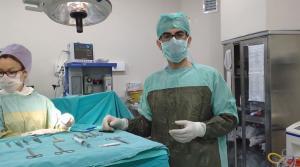
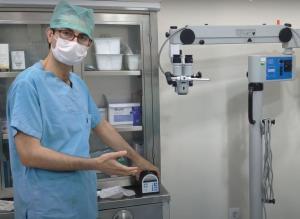
Microsurgical varicocele surgery describes surgery performed using a microscope. The spermatic cord is reached through a 2 cm incision in the groin. With the help of the microscope the vascular anatomy of the testis is revealed in great detail. The locations of the arteries supplying the testis are identified; the lymphatics and the sperm-carrying duct are recognised. Then, with millimetric movements, the veins carrying deoxygenated blood are ligated or removed. In this way the pooling of deoxygenated blood over the testis is prevented and the testis is enabled to work better.
What is the process after varicocele surgery?
When varicocele surgery is performed with a microscope it takes about 25 minutes. The patient can be discharged 6 to 12 hours after surgery and can resume normal life after resting for 2 days. Because no muscle is cut in operations performed under the microscope and the operation is completed quickly, the post-operative period is comfortable.
Who is suitable for varicocele surgery?
Male patients who have difficulty having children, whose sexual performance has decreased and who have testicular pain are candidates for varicocele surgery.
Does varicocele surgery improve sperm quality?
After varicocele surgery the sperm parameters improve in most patients and they are able to have children, because due to the pressure of deoxygenated blood and the heat created by the varicocele on the testis, the testis cannot produce healthy sperm. When the flow of deoxygenated blood is stopped, testicular function usually recovers.
What is the chance of having a child after varicocele surgery?
The woman's age is as important as sperm quality in determining the percentage chance of having a child. But in general, after varicocele surgery pregnancy is seen in 37% within the first 6 months and in 60% within 1 year. An increase in sperm quality occurs in over 90% of patients.
What are the advantages of microsurgery?
In microsurgery performed under the microscope, because a better and more detailed view is obtained, the arteries supplying the testis, the lymphatic vascular structure and the veins carrying deoxygenated blood are seen clearly. In this way the maximum number of veins carrying deoxygenated blood are ligated while the lymphatics and arteries are preserved.
While the risk of fluid accumulation around the testis (hydrocele) after open surgery is 30%, with the microsurgical technique this rate is 0%. Likewise, while the post-operative recurrence rate in open surgery is 30%, in microsurgery it is 1%. In open surgery there is a risk of injury to the arteries supplying the testis, but in microsurgery this is almost impossible.
Can varicocele be treated without surgery?
Varicocele cannot be treated without surgery. Alternative treatments such as leech therapy and herbal treatment do not treat varicocele and may even make it worse. The problem in varicocele is the presence of damaged veins and the harm done to the testis by the deoxygenated blood that pools in them. That is why these veins must be removed surgically.
What is subclinical varicocele?
Subclinical varicocele is a varicocele detected only by ultrasound. It usually has no clinical significance, but if sperm morphology is 0% and reflux is present, it may need to be treated.
Who is more likely to have varicocele?
There are patient groups in whom varicocele is seen more often: those working in bakeries and pastry shops, those who stand a lot, those who shower with very hot water and go to the Turkish bath and sauna frequently, those who do weight training, and those with a constitutional vascular disease.
What adverse conditions does varicocele cause?
While varicocele usually causes the patient no harm, in some patients it leads to adverse conditions such as testicular pain, testosterone hormone disorder and impaired sperm quality.
Does varicocele cause pain?
Varicocele usually does not cause pain, but in those with advanced-grade varicocele it can cause complaints such as testicular pain, pain radiating to the legs and warmth in the testis.
How is varicocele treated in azoospermic patients?
Varicocele itself can cause azoospermia in patients. Azoospermia literally means the absence of sperm in the semen. Varicocele can damage the testis and stop sperm production completely. In patients with azoospermia and advanced-grade varicocele, treating the varicocele first will lead to spontaneous sperm appearance in 15% of patients within 6 months. Even if no sperm appears, the chance of finding sperm at micro-TESE will increase.
How should adolescent varicocele be treated?
Adolescent varicocele is a special situation, because you are dealing with a growing body and a sensitive organ. The criteria here are the grade of the varicocele and the presence of reflux. As a principle, if the varicocele reduces the volume of the testis or causes softening of its consistency, it must be treated with microsurgery.
Whereas a semen analysis is normally requested before varicocele surgery, in the adolescent group it is not requested because sperm production has not fully begun. Requesting a semen analysis in this age group can lead both to misinterpretation and to psychological problems in the young man.
Can bilateral varicocele be treated?
The answer to this question is yes. Bilateral varicocele can easily be treated in the same session.
Should every varicocele be treated?
Not every varicocele needs to be treated. A patient with a normal semen analysis, no testicular pain and who already has children does not need his varicocele treated.
The effect of varicocele on sexual health
By disrupting testosterone production in the man, varicocele can cause erectile problems or loss of sexual desire. In some patients it can negatively affect sexual performance by causing testicular pain.
Is there a chance of recurrence after surgery?
In varicocele surgery performed with the microsurgical technique the risk of recurrence is below 5%. After surgery performed with open surgery the risk of recurrence is around 30%.
Do X-rays or radiation harm the testicles?
Unfortunately, radiation can damage the sensitive testicular cells and negatively affect sperm production.
Does varicocele disappear on its own?
Varicocele does not disappear on its own; on the contrary, it continues to increase over time, because there is a damaged tangle of veins around the testis and these must be removed.
Doppler technology in varicocele surgery
Thanks to the 1.5 mm intraoperative Doppler that we use in addition to the microscopic technique in varicocele surgery, we can both ligate more veins carrying deoxygenated blood and, by identifying more arteries, perform safer surgery. We have been using this technology, used in only a few centres in Turkey, safely for 4 years. The aim here is to identify the arterial structure quickly and protect it with both the microscopic image and Doppler technology. In our scientific publication on this subject it was found that more veins could be ligated, there was less recurrence and better results were obtained.
Especially in patients with a single testis, adolescent varicoceles and recurrent varicoceles, using Doppler will make the surgeon's job easier and enable safer surgery.
How long does varicocele surgery take?
Microsurgical varicocele surgery takes 25–35 minutes on average for one side and 45 minutes to 1 hour for both sides. The operation time is affected by experience in using the microscope, the use of intraoperative Doppler and whether the varicocele is a recurrence or a first operation.
When is sexual intercourse allowed after varicocele surgery?
Sexual intercourse is possible about 3 weeks after varicocele surgery. If intercourse takes place earlier, testicular and groin pain may occur.