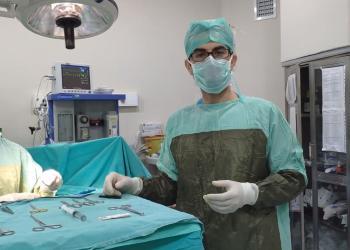
5,500 operations and 15 years of experience
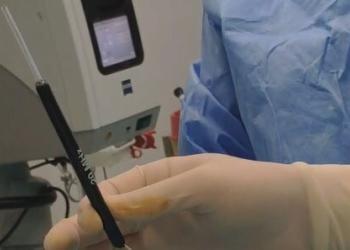
THE RIGHT TECHNOLOGY IN VARICOCELE SURGERY: INTRAOPERATIVE 1.5 MM DOPPLER
With microvascular Doppler in microsurgical varicocele repair it is possible to prevent recurrent varicocele. The Doppler device almost completely eliminates the margin of error during surgery.
The success rate is far higher than with other techniques.
What is the intraoperative 1.5 mm Doppler?
With the 1.5 mm Doppler, in cases where the artery cannot be seen, the location of the vessel is identified so that a more careful and detailed operation can be performed. This Doppler does not need to be used in every case, but in cases where the artery cannot be seen this Doppler ultrasound improves the course and the safety of the operation.
Scientific publications have shown that thanks to this Doppler there are fewer recurrences and more veins are ligated.
Intraoperative 1.5 mm Doppler
During microscopic varicocele surgery the artery that supplies the testis (testicular artery) is sometimes not encountered. Because the artery cannot be seen, a detailed operation cannot be performed and, in order not to damage the artery, some veins may be left unligated.
What is varicocele? Why does varicocele occur?
Varicocele is the abnormal enlargement of the veins around the testis.
Veins are the vessels that return blood to the heart. Normally veins contain valves that keep the blood moving in the right direction. However, when the valves in the testicular veins deteriorate and fail to work properly, gravity causes blood to pool around the testis. This clinical picture occurs mostly on the left side.
How common is varicocele?
Varicocele is common in men; in fact 15% of adult men have a varicocele. In most cases, however, it causes the patient no harm.
What problems does varicocele cause?
Varicocele can cause three different basic problems:
- It can cause infertility by impairing sperm quality
- It can affect testosterone production by the testis
- It can cause pain and a feeling of fullness in the testis
At least one of the three reasons above must be present to treat a varicocele. In some cases varicocele can cause azoospermia (no sperm at all in the semen).
Because varicocele is very common in men and is often not diagnosed, most patients never encounter a hormonal problem, testicular pain or a fertility problem.
Varicocele and infertility
A varicocele is found on examination in one in three men who cannot have children. Varicocele is categorised by whether it is unilateral or bilateral and by its grade.
An important point to know is that varicocele of any grade can affect fertility. According to recent research, varicocele can affect sperm functions that cannot be detected by a semen analysis. The most effective parameter in this regard is the sperm DFI (Sperm DNA Fragmentation Index). Studies have been published showing that after failed IVF attempts, correcting the man's varicocele increases IVF success.
A unilateral varicocele impairs the function of both testes. As mentioned earlier, a varicocele that cannot be felt on examination and is detected only by ultrasound is not considered clinically significant.
When should varicocele be corrected?
Varicocele treatment must be planned individually. The decision is influenced in particular by the grade of the varicocele, whether the patient plans to have children, complaints caused by low testosterone or testicular pain, the blood testosterone level and the results of the semen analysis.
In couples who want to have children, the woman's age and fertility status become important when planning varicocele surgery. Therefore, if varicocele surgery is being planned for male fertility, the woman should have no age-related fertility problem or hormonal condition that would prevent conception. If the woman has not yet been evaluated by a gynaecologist, she should first be examined to rule out any condition that could prevent conception.
There is strong evidence that varicocele surgery improves testicular function and halts future testicular damage, but the degree of benefit from varicocele surgery is related to the grade of the varicocele. The likely benefits after surgery for an advanced-grade varicocele will be greater. Testicular function can be measured by semen analysis, testicular volume or blood tests. If deterioration in testicular function has begun, varicocele surgery is beneficial for stopping and reversing this deterioration.
If testicular function has not been affected by the varicocele, there are conflicting opinions about correcting it. If you want to have varicocele surgery to prevent future deterioration of testicular function, you should make this decision together with your urologist by weighing the benefits and risks.
An alternative approach is to have sperm and hormone tests at regular intervals and to treat the varicocele as soon as deterioration in testicular function begins.
When should the man's varicocele be treated in a couple without children?
- When deterioration in the semen analysis begins
- If the woman has no condition that would prevent conception
- If there is no clear reason preventing the man from fathering a child (such as obstruction of the sperm-carrying ducts, previous cancer treatment or a genetic disorder)
Microsurgical subinguinal varicocelectomy
How is microsurgical subinguinal varicocele surgery performed?
The operation can be performed under general or spinal anaesthesia. Through a 2 cm incision in the groin the spermatic cord is located and lifted. The veins are identified, ligated and divided. Meanwhile the important structures running to the testis (vas deferens, testicular artery and the lymphatic vessels of the testis) are preserved.
Why do we prefer the subinguinal microsurgical varicocelectomy technique?
Because no muscles are cut in this method there is less pain after surgery and a lower risk of post-operative inguinal hernia. With the microscope the lymphatics are preserved, so the risk of fluid accumulation around the testis (hydrocele) after surgery is greatly reduced.
What are the side effects of varicocele surgery?
Potential risks after surgery are recurrence or persistence of the varicocele, testicular tenderness and infection. Although there is a risk of hydrocele (fluid accumulation around the testis), this risk is greatly reduced after varicocele surgery performed with a microscope. Very, very rarely, if the artery to the testis is injured in less experienced hands, there is a risk of losing the testis.
How does varicocele surgery affect fertility?
After at least one year of follow-up of 540 male patients who could not have children and were diagnosed with a clinically evident varicocele, following microscopic varicocele surgery:
- An increase in forward sperm motility was observed in the semen analysis of 271 (50%) patients.
- Spontaneous pregnancy occurred in 36.6% within an average of 7 months (range 1 to 19 months).
- In 31% of couples who were IVF candidates before surgery, sperm counts increased enough to allow intrauterine insemination; pregnancy occurred in 42% of these inseminated couples.
In conclusion, after surgery for a clinical varicocele an improvement in semen analyses is usually obtained, and the need for assisted reproduction techniques is reduced.
Should varicocele surgery be performed in azoospermic patients?
Data from a recent study show that in patients with an advanced-grade varicocele who also developed azoospermia, spontaneous sperm appeared after varicocele surgery in about 10% of cases.
Should varicocele be treated if sperm count, motility and morphology are normal but pregnancy does not occur despite IVF?
In recent years it has been shown that varicocele damages sperm DNA and is responsible for unexplained infertility or recurrent miscarriage. Therefore in such cases each case must be evaluated in detail on its own merits, and if necessary the varicocele should be corrected to improve sperm quality, even if the sperm count is normal.
Points to consider before and after varicocele surgery
- Nothing should be eaten or drunk for 6 hours before varicocele surgery.
- Either spinal anaesthesia (from the waist down) or general anaesthesia may be chosen.
- After surgery the patient is kept under observation in hospital for at least 12 hours and discharged with painkillers and antibiotics.
- A special waterproof dressing is applied; showering is possible after 1 day.
- Provided the work is not heavy, you can return to work on the 3rd day after surgery.
- Two days after surgery the dressing is renewed and the wound is checked.
- Sexual intercourse is prohibited for 3 weeks.
- If a child is desired, additional vitamin and antioxidant treatment is started after the operation, and a semen analysis in the 3rd month checks how beneficial the surgery has been.
- Once the patient's partner becomes pregnant, the patient is discharged from follow-up.