What Is Erectile Failure?

Our approach to patients with erectile dysfunction. What are our treatment protocols? A personalised approach.
Erectile failure is a common health problem in men that is rarely brought to a physician. For cultural reasons and out of shyness, men usually do not seek treatment. On the other hand, this widespread problem reduces the patient's quality of life and causes problems with their partner.
Men with this problem hesitate about marriage and do not dare to marry. Likewise, married men with erectile problems may experience difficulties within the marriage.
What does erectile failure, which can affect quality of life so much, mean? In short, it can be summarised as the man not reaching sufficient rigidity of the penis for intercourse, or the penis softening before sexual satisfaction.
At the Dr. Muhsin Balaban Sexual Problems Treatment Centre in Istanbul we treat our patients with a personalised treatment approach. The patient who comes to our clinic with erectile failure is placed at the centre of the treatment, and first it is determined whether the problem is genuinely due to an organic cause or a psychological one.
Because our Men's Health Centre, the first and only one in Istanbul, accepts only patients presenting with these problems, men who come for treatment feel no embarrassment. To put our patients at ease, they are welcomed in a comfortable, home-like environment by experienced, specially trained staff.
Before starting treatment, Dr. Muhsin listens to the patient for at least 30 minutes to get to the root of the problem, and then examines the patient. After the necessary trust has been established and the main cause of the erectile failure has been identified, the treatment plan follows. At the diagnostic stage a penile and testicular examination, ultrasound imaging and detailed blood tests are performed.
Once the intensity and duration of treatment the person needs have been planned, medication, ESWT (shockwave therapy), penile PRP (P-Shot), stem cell therapy and, if necessary, penile prosthesis treatments are explained in detail and started.
At the Dr. Muhsin Balaban Sexual Problems Treatment Centre we approach the patient with a results-oriented, problem-solving philosophy, and with the professionalism our experience gives us we apply a treatment plan that will make our patients happy.
Why does erectile dysfunction occur?
Erectile dysfunction, or erectile failure, has two main causes: it may be due to an identifiable disease of the person, called organic, or it may be psychological in origin.
Organic causes:
Systemic diseases that can affect the whole body:
heart disease, diabetes, kidney failure, high cholesterol or side effects of medication, hormone deficiency, excess weight, a sedentary lifestyle, poor nutrition.
Conditions affecting only the penis:
arterial insufficiency, venous leak, Peyronie's disease, prolonged priapism, previous pelvic surgery.
Psychological causes:
diagnosed psychological illnesses, intense work stress, problems with the partner, erectile problems developing secondary to premature ejaculation, loss of sexual desire, performance anxiety, excessive masturbation, watching excessive sexual content and making comparisons.
Is there a permanent treatment for erectile dysfunction?
The answer to this question is yes. A permanent treatment can only be achieved when the patient presenting with an erectile problem is approached correctly and the underlying cause of the erectile problem is revealed.
For example, if an erectile problem has begun in a man with uncontrolled diabetes, an endocrinologist must be included in the treatment and diabetes control must be achieved. When such issues are taken into account, the erectile treatments applied to the patient will be lasting. Patients whose treatment is complete and whose erectile problem has resolved are strongly advised to pay attention to their nutrition and daily exercise and to have a check-up once a year, because human beings are dynamic organisms and hormone balance can be disturbed. Erectile dysfunction usually presents not as a cause but as a consequence, and if the disease creating the erectile problem is not kept under control, the problem has the potential to return.
If a healthy lifestyle can be maintained, the effect of the treatment offered to the patient will last a long time.
Can combined treatments be applied?
Erectile dysfunction is not of the same severity in every man. In erectile dysfunction, which may be mild, moderate or severe, the variety and duration of the treatment offered can also vary.
Among the treatments we can use for erectile dysfunction, ESWT (shockwave therapy), penile PRP (P-Shot) and stem cell applications can be used together when necessary. For example, applying 3 sessions of ESWT beforehand to a man who is to receive stem cell therapy will increase the effectiveness of the stem cells. Likewise, combining penile PRP with ESWT (shockwave therapy) can give results that make the patient happier.
Which tests may be requested before starting erectile dysfunction treatment?
The tests can vary according to the clinical picture of the patient presenting with erectile failure. For example, in erectile failure assessed as mild, hormone analysis (total testosterone, LH, prolactin, vitamin D, 3-month average blood sugar) may be sufficient, while in severe erection problems (no rigidity at all) penile Doppler ultrasound may be requested in addition to blood tests, because if the patient has serious vascular insufficiency or a serious venous leak, treatment must be planned accordingly. For example, a patient who has been unable to achieve any erection or have intercourse for 2 years should be offered stem cell therapy or a penile prosthesis, because other treatments will be less effective.
A psychiatric consultation may also be requested for a psychological assessment of patients experiencing serious anxiety.
Which treatments are available when PDE5 inhibitors are ineffective?
PDE5 drugs are offered to the patient as first-line treatment. Where they prove insufficient, shockwave therapy, penile PRP, stem cell therapy or penile prosthesis treatments can be offered.
Before these treatments are offered, the patient is strongly advised to pay attention to sleep, switch to a Mediterranean-style diet and exercise daily.
Testosterone therapy in the treatment of erectile dysfunction
The hormone testosterone is very important for keeping the penile tissue healthy and for a man's sexual drive. When a man has low testosterone, the clinical picture we call ANDROPAUSE appears. These patients feel loss of sexual desire, erectile problems, low energy, low mood and constant fatigue. The level of such an important hormone must be sufficient for a healthy sex life.
In this treatment, also known as hormone replacement therapy, ready-made hormone must be taken externally. There are 2 forms. The first is a gel that the patient applies 3 times a week to a hairless area of the body. The other form is injections of depot testosterone that the patient uses every 3 weeks or every 3 months. This treatment lasts 3 to 6 months.
An important reminder: for patients who want to have children, taking ready-made testosterone externally is inadvisable. Instead of direct testosterone, these patients should be offered a separate treatment option that stimulates hormone production by the testis.
What is self-injection therapy?
This treatment option can be recommended for patients whose erectile failure has not improved despite shockwave therapy, penile PRP and stem cell therapy and who do not want a penile prosthesis. The patient is given special training on where and how to inject. Usually, with an insulin syringe, the drug is delivered into the tubes called the corpus cavernosum on the sides of the penis. An erection begins 5 minutes after the drug is given and lasts about 1 hour, during which the patient can comfortably have sexual intercourse.
Intracavernosal (ICI) and intraurethral (IU) treatments for ED
These drugs are rarely used. They are applied as a cream at the point where the urinary canal opens from the penis. The problem here is that sensitivity and irritation of the skin can occur.
Surgical treatment of erectile dysfunction
If erectile failure persists despite all the treatments applied, the option of a penile prosthesis, or “happiness stick”, comes up. This is performed with a surgical procedure lasting 1 to 1.5 hours. The operation itself is not risky, but if the patient has a serious heart problem or uncontrolled diabetes, surgical risks arise. For this reason strict blood sugar control is required in patients scheduled for a penile prosthesis.
Can a man with a penile prosthesis have children?
Because there will be no problem with ejaculation in patients with a penile prosthesis, if a child is desired the partner can become pregnant. The key point here, of course, is that the man's sperm quality is good.
After a penile prosthesis there is no change in sensation for the patient, and ejaculation can occur.
How many types of penile prosthesis are there?
To classify penile prostheses, we should mention two-piece malleable and three-piece inflatable prostheses.
Two-piece malleable prosthesis
When choosing the prosthesis suitable for the patient, their expectations and age are taken into account. The advantages of malleable prostheses are that they are cheaper, the surgery is shorter and the risks are lower. The disadvantage is that they can be noticeable from the outside when tight clothing is worn. When intercourse is desired the prosthesis is straightened and intercourse takes place; when it is over the prosthesis is bent by hand back to its previous position. It is very easy to use and can be replaced with a three-piece prosthesis whenever desired.
Three-piece inflatable prostheses
Three-piece inflatable prostheses are more anatomical than malleable ones and are not noticeable from the outside. They have 3 separate mechanisms: the prosthesis placed inside the corpora cavernosa of the penis, the reservoir placed inside the abdomen, and the pump placed between the testicles. Patient and partner satisfaction is over 95%. Although the surgery costs more than the other type, the satisfaction rate is higher. Manufacturers provide a lifetime guarantee against mechanical failure. The operation takes 1.5 to 2 hours, and the prosthesis can be used 6 weeks after surgery. After surgery the patient is given special training by the physician and the manufacturer.
Prostheses that expand in both girth and length
This type of prosthesis can provide up to 1–2 cm of lengthening and thickening of the penis. The advantage of this prosthesis is that when the penile tissue loosens over the years, the patient does not notice it thanks to this prosthesis and can use it more comfortably.
It is more expensive than other prosthesis models, but the operation time and surgical risks are the same as the others.
Our ED treatment methods in patients after cancer surgery
After prostate cancer surgery or pelvic surgery the nerve and vascular network of the penis is damaged. Some of these patients can benefit from PDE5 inhibitor therapy, shockwave therapy or stem cell therapy. For patients who do not benefit despite these treatments, the option of a penile prosthesis comes up.
A penile prosthesis is a special mechanism made of a special material and placed inside the tubes of the penis called the cavernosa. There are 2 types: two-piece and three-piece inflatable.
Our approach to patients after erectile dysfunction treatment at our clinic
Patients treated for erectile failure at our clinic continue to be followed up at certain intervals. Patients from abroad are advised to have a hormone test and a general check-up once a year. As people age it is very important for their general health to remain under control. A testosterone level that is normal today may drop a year later and impair erection quality.
ESWT shockwave therapy in the treatment of erectile dysfunction
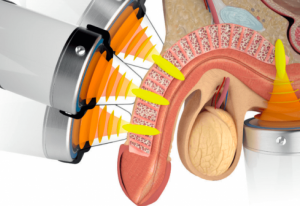
In the treatment of erectile failure, ESWT stands out with a success rate of over 80%. Thanks to the therapeutic waves applied to the penile tissue, the underperforming vessels inside the penis are regenerated and new vessels form. As a result the amount of blood filling the penis increases and quality rigidity begins to develop.
This treatment, which has no side effects, can be repeated whenever desired. If the patient wishes, they can have intercourse the same day. In our clinic the latest technological devices are used for shockwave therapy and maximum effect can be obtained.
Stem cell therapy in the treatment of erectile dysfunction
The logic of stem cell therapy is to obtain the parent cell, place it in the damaged organ and enable it to transform into the tissue in which it is placed. Bone marrow or abdominal fat is used for stem cells.
For erectile failure, fat taken from the abdomen by liposuction is put through a special process and then placed inside the penis with a fine needle. Within 3 months the stem cells begin to work inside the penis and form new blood vessels. As a result rigidity begins to develop in the man.
To whom should we recommend stem cell therapy? It is recommended for patients who have not benefited from shockwave therapy and penile PRP and who do not want penile prosthesis surgery. 65% of patients benefit from it. In my experience this treatment should be offered to patients before a penile prosthesis.
P-SHOT in the treatment of erectile dysfunction
P-SHOT, or penile PRP therapy, acts on the principle of regenerating the penile tissues and forming new blood vessels. In PRP therapy, blood taken from the patient is put through a special process to obtain a fluid rich in platelets and growth factors. This PRP is then injected into the tissues of the penis. As a result the patient has more sensation and better erections. Some patients report that after this procedure the penis has become thicker and slightly longer. The aim of penile PRP therapy is to increase erection quality. It has no side effects and is a repeatable procedure.